
Implant Hybrid Bar Dental Laboratory
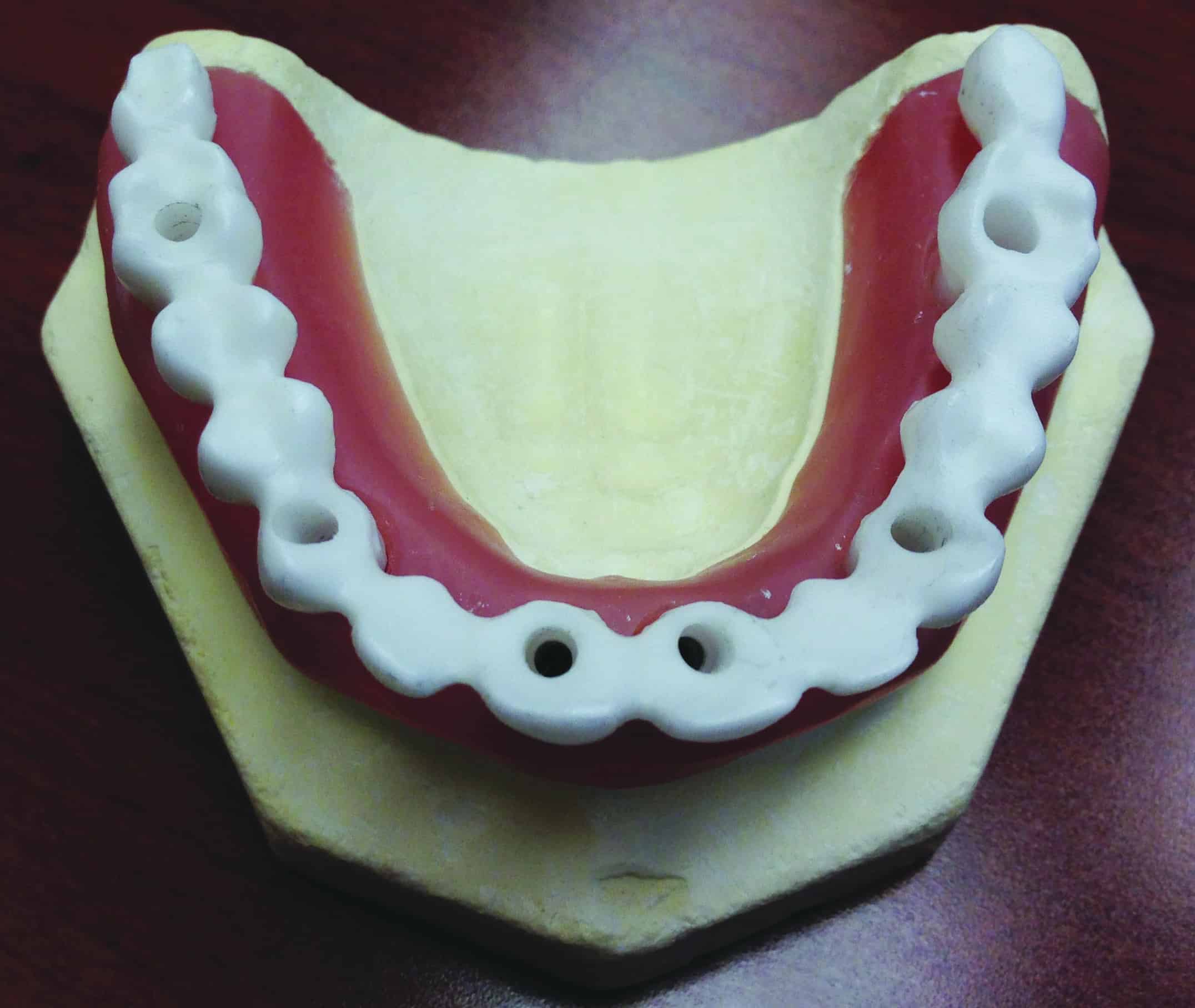
Implant hybrid bar restorations at The Art of Aesthetics are designed for full-arch cases requiring a passive fit, structural integrity, and long-term functional stability. Each case is developed with careful control of framework design, prosthetic space, and load distribution to support screw-retained hybrid restorations. The bar is engineered to seat passively on implants or multi-unit abutments, minimizing stress and reducing the risk of mechanical complications. Attention is given to emergence profile, hygiene access, and soft tissue management to ensure clinical success beyond initial delivery. Materials and design are selected based on case requirements, balancing strength, weight, and aesthetics. Every hybrid bar is evaluated for accuracy and consistency before finalization. This is not a generalized solution. Each restoration is built to integrate precisely within the clinical environment and perform predictably under full arch function.
Zirconia Implant Crowns for Restorative Dentists
ZimVie Implant Systems
ZimVie implant systems are supported with precise framework design and interface compatibility for hybrid bar restorations. Attention is given to connection accuracy, multi-unit abutment alignment, and passive seating to ensure stability across full arch cases. Each bar is designed to integrate seamlessly with the system’s prosthetic components and clinical workflow.
Nobel Biocare Implant Systems
Nobel Biocare systems are widely used in full arch and All-on-X protocols. Hybrid bars are developed to align with Nobel interfaces, maintaining accuracy at the connection level while supporting proper load distribution. Emphasis is placed on passive fit and long-term mechanical reliability.
Straumann Implant Systems
Straumann implant systems require precise tolerance control and compatibility with their prosthetic components. Hybrid bars are designed to ensure accurate seating, structural strength, and predictable performance under functional load. Attention is also given to emergence profile and tissue response.
BioHorizons Implant Systems
BioHorizons systems are supported with hybrid bar designs that prioritize connection accuracy and prosthetic stability. Frameworks are engineered to maintain passive fit while accommodating clinical variations in implant positioning and angulation.
Hiossen Implant Systems
Hiossen implant systems are integrated with hybrid bar designs that ensure reliable fit and functional performance. Each case is evaluated for alignment, seating accuracy, and load distribution to support consistent full arch outcomes.
Argen Implant Systems
Argen implant systems are supported with hybrid bar designs that emphasize precise fit and material reliability. Frameworks are developed to ensure compatibility with Argen components while maintaining passive seating across multiple implants. Attention is given to structural integrity, connection accuracy, and consistent performance in full arch restorations.
Passive Fit and Framework Accuracy
Passive Seating Across Multiple Implants
Passive fit is critical in implant hybrid bar restorations. The framework must seat without stress across all implants or multi-unit abutments. Even minor discrepancies can introduce strain, leading to screw loosening or component complications. Each bar is evaluated to ensure accurate seating and stability across the entire arch.
Framework Design and Structural Integrity
Hybrid bars are engineered to maintain rigidity while distributing occlusal load evenly. Proper framework design ensures strength without unnecessary bulk, supporting long-term function under full arch loading conditions.
Tolerance Control and Verification
Precise control of tolerances is maintained throughout design and fabrication. Verification methods are applied to confirm fit accuracy before finalization, reducing the risk of misfit and minimizing chairside adjustment.
Load Distribution and Mechanical Stability
Implant positions, angulation, and prosthetic design are considered to optimize load distribution. This ensures mechanical stability and reduces the risk of long-term complications in full arch restorations.
Prosthetic Space and Design Considerations
Prosthetic space and design are critical factors in the success of implant hybrid bar restorations. At The Art of Aesthetics, each case is evaluated to ensure adequate vertical and horizontal space for proper framework thickness, material strength, and restorative contour. Insufficient space can compromise structural integrity, while excessive space may negatively affect esthetics and hygiene. Emergence profile is carefully developed to support soft tissue architecture and maintain biologic stability, while allowing for effective patient maintenance. Contour and design are balanced to optimize function, phonetics, and lip support without overbuilding the restoration. Implant positioning and angulation are also considered to ensure proper load distribution and long-term mechanical stability. The objective is to create a restoration that integrates seamlessly within the clinical environment while supporting durability, cleansability, and predictable full arch performance.
Material Selection for Hybrid Bar Strength
Material selection directly impacts the performance of a hybrid bar. Titanium frameworks provide strength and precision, while zirconia offers esthetics with structural integrity. Each case is evaluated to balance rigidity, weight, and function, ensuring the restoration performs reliably under full arch load without compromise.
Verification and Final Fit Protocol
Verification is a critical step in the fabrication of implant hybrid bar restorations. Each case undergoes controlled evaluation to confirm passive fit, accurate seating, and framework stability across all implants or multi-unit abutments. This process helps identify and correct any discrepancies before finalization, reducing the risk of mechanical complications such as screw loosening or component stress. Fit verification may include physical model assessment and alignment checks to ensure the framework seats without tension. Attention is also given to contact relationships, occlusion, and overall structural integrity prior to delivery. By validating these parameters in advance, chairside adjustment is minimized and clinical efficiency is improved. The objective is to deliver a restoration that seats precisely, functions as intended, and maintains long-term stability under full arch loading conditions without introducing unnecessary variables at insertion.
Full Arch Function and Load Management
Full arch implant restorations require precise control of functional load to ensure long-term mechanical stability. Each hybrid bar is designed to distribute occlusal forces evenly across all supporting implants, minimizing overload on individual components. Implant position, angulation, and prosthetic design are evaluated to optimize force distribution under dynamic conditions. Occlusal scheme is carefully developed to control intensity and reduce lateral stress, particularly in posterior regions where load is greatest. Proper load management helps prevent complications such as screw loosening, framework fatigue, or component failure. Structural design and material selection are aligned to support durability under continuous function. The objective is to create a balanced system where implants, framework, and prosthesis work together to maintain stability, preserve supporting structures, and deliver consistent performance in full arch restorations.
How to Get Started with The Art of Aesthetics Implant Dental Laboratory
Getting started with The Art of Aesthetics Implant Dental Laboratory is straightforward. Cases may be submitted through intraoral scanning systems or by sending conventional impressions with a detailed prescription. Each case is reviewed prior to fabrication to ensure alignment with clinical requirements, implant system compatibility, and restorative objectives. Communication is direct and focused, allowing preferences and adjustments to be incorporated early in the process. For new clients, beginning with a single case is recommended to evaluate fit, framework accuracy, and overall consistency. This initial case establishes workflow alignment and sets expectations for future collaboration. Whether submitting a single hybrid bar or transitioning full-arch cases, the process is structured to deliver predictable results with minimal chairside adjustments and reliable clinical outcomes.
Send Your Implant Hybrid Bar Case
Submitting a case to The Art of Aesthetics Implant Dental Laboratory is structured for clarity, precision, and predictable outcomes. Cases may be submitted through intraoral scanning systems or by sending conventional impressions with a detailed prescription, including implant system, restorative space, and design preferences. Each case is reviewed prior to fabrication to confirm compatibility, framework requirements, and clinical objectives. Communication is direct and purposeful, ensuring critical details are addressed early to avoid unnecessary revisions. For new clients, starting with a single case is recommended to evaluate passive fit, framework accuracy, and overall consistency. This initial case establishes alignment in workflow and expectations. Whether managing a single hybrid bar or multiple full arch restorations, the objective remains consistent—deliver a restoration that seats passively, functions correctly, and performs reliably under full arch conditions.